Hair Curling Irons and Wands: How to Choose the Right Tool
Which Curling Iron or Wand Fits Your Hair and Styling Routine?
Choose a curling iron if you want a clamp to hold each section while you shape it; choose a wand if you prefer wrapping hair around an unclamped barrel. Neither is universally better. The right choice combines a manageable technique, a barrel suited to your hair length and desired curl, and heat controls appropriate for your routine.
A conventional iron can help when controlling loose ends feels difficult, although operating the clamp takes practice. A wand offers a different wrapping technique and leaves you responsible for guiding the section around the barrel. Consider which motion you can repeat comfortably, especially at the back of your head. A tool that feels awkward in your hand may be a poor purchase even when its specifications look appealing.
ghd’s official category guide describes the clamp distinction and associates tongs with defined curls and wands with relaxed waves. Treat these as useful starting points rather than exclusive results. Technique, barrel shape, section size, hair length, and the way you finish the style also influence the outcome.
Heat exposure deserves as much attention as curl shape. The American Academy of Dermatology advises limiting hot-tool use, choosing low or medium heat settings, and using a heat-protective product. A high maximum temperature is therefore not a reason by itself to buy a tool. Heat protection also does not make unlimited styling harmless.
Key takeaways: decide on the result first, compare clamp and wand handling second, then examine barrel dimensions, temperature control, and electrical compatibility. For occasional loose waves, one suitable barrel may be sufficient. For regular changes between defined curls and broader waves, a compatible interchangeable system may be worth considering. For fragile or frequently processed hair, reducing heat exposure should remain part of the decision, including the option of heatless styling.
How Do Curling-Iron and Wand Types Differ?
Clamp irons and cylindrical wands
A clamp iron holds hair against a heated barrel. A cylindrical wand has no clamp and maintains a broadly consistent diameter along its styling surface. The choice changes how you position and release the section. Do not assume an iron is automatically easier for everyone: grip, dexterity, and familiarity matter more than a beginner label.
Tapered wands
A tapered wand becomes narrower toward one end. Hair can wrap around different diameters along its length, giving you another way to vary the shape. Check the stated diameter range rather than comparing only the widest point with a straight barrel. Consider whether you want that variation or would prefer a simpler, consistent barrel shape.
Interchangeable sets and rotating tools
Some systems let you change the barrel on one powered base. Others rotate the barrel to assist wrapping. T3’s official curling-tool collection illustrates these distinct categories, including clip barrels, wand barrels, interchangeable bases, and an auto-rotating iron. Those examples establish available designs, rather than proving that a larger kit will work better for you.
For interchangeable tools, verify the exact base and attachment compatibility. A familiar brand name or similar connector appearance is insufficient. For rotating tools, check how direction selection and release work before deciding whether the mechanism suits your coordination and hair length.
| Tool type | Main handling difference | Useful buying question |
|---|---|---|
| Clamp iron | A clip holds the section | Can I operate and release the clamp comfortably? |
| Straight wand | Hair wraps around a consistent barrel | Can I guide the section without crowding my fingers? |
| Tapered wand | Barrel width changes along its length | Do I want variation within the curl? |
| Interchangeable system | Attachments share a compatible base | Which included barrels would I actually use? |
| Rotating iron | A powered movement assists wrapping | Do the controls and release procedure feel understandable? |
Airflow curlers are a separate design category. Follow their own moisture and attachment instructions rather than applying conventional hot-barrel instructions to them. Similar finished hairstyles do not mean that the tools operate in the same way.
Barrel Size, Heat Control, and Everyday Usability
Start with the style you expect to create most often. Smaller barrels generally favor more defined curls, while broader barrels favor larger bends and looser waves. These are tendencies, not guarantees of a finished curl diameter. A long section wrapped tightly and a short section loosely shaped on the same barrel can look different after release.
Check diameter and usable barrel length separately. Diameter concerns curl shape; usable length concerns how much space you have to arrange the section. Long hair may be easier to manage on a longer barrel, while a very broad barrel may provide too little wrapping opportunity for a short section. Compare dimensions with the hair you have now, not only a reference photograph showing a different length.
For heat control, look for clear settings, readable units, and controls you can operate without accidentally changing them. Adjustable temperature gives you options, but a dial alone does not establish temperature accuracy. A fixed-temperature model also deserves scrutiny: check whether its documented operating temperature and instructions suit your intended use instead of assuming one setting is appropriate for every head of hair.
Surface descriptions such as ceramic, titanium, or mixed coatings are only part of the specification. BaBylissPRO’s published product information, for example, describes a titanium-ceramic barrel, showing why material labels need to be read precisely. Do not turn a coating name into an unsupported promise of superior results or damage prevention.
Finally, evaluate the handle, cord, stand, accessible cool tip, and storage needs. A swivel cord may help maneuvering, but consider where your socket and mirror sit. Automatic shutoff is a feature to verify on the exact model, including its stated timing; it does not replace switching off and unplugging after use.
Build a shortlist around three priorities, such as comfortable handling, a suitable barrel, and clear temperature controls. Add specialized attachments only when they solve an identified styling problem. This makes comparison more meaningful than ranking tools by their hottest setting or the number of accessories in the box.
Curling-Iron Mistakes and Pre-Purchase Checks
One frequent mistake is using more heat or repeating a section because the first attempt looks different from a photograph. Before increasing exposure, reconsider the barrel, section arrangement, and whether the reference style matches your length. Read the tool’s instructions and keep contact brief. A result that requires repeated heating may call for a different approach rather than a higher setting.
For conventional heated-barrel tools, begin with dry hair and follow the instructions for any styling product you apply. ghd’s styling guidance places tong use after drying. Do not treat a conventional iron as a substitute for a dryer or assume an airflow tool’s damp-hair directions apply to a hot barrel.
Hot-tool storage is another practical issue. Electrical Safety First recommends keeping tongs unplugged when not in use and avoiding winding the cable around them for storage. Arrange a suitable resting and cooling area before you start. Keep hot surfaces away from children and combustible materials, and follow the model’s storage instructions.
Travel introduces a separate compatibility check. A plug fitting the socket does not prove the tool can use the local electrical supply. Electrical Safety First’s travel-adaptor advice explains that ordinary adaptors do not convert voltage or frequency. Check the appliance label, destination supply, and adaptor rating. If compatibility remains unclear, ask the manufacturer before plugging it in.
Before purchase, confirm:
- The exact barrel diameter, usable length, and clamp or wand design.
- Temperature settings and the manufacturer’s usage instructions.
- Power requirements and the appropriate plug for your location.
- Included accessories and any separately required compatible base.
- Seller identity, documented warranty terms, and return conditions.
- A storage arrangement that allows the tool to cool as instructed.
Do not infer these details from a photograph of a related model. A bundle name, color, or regional version may correspond to different contents or specifications, so match the model identifier across the listing and documentation.
Answer These Curling-Tool Questions Before Buying
What are hair curling irons and wands?
They are heated styling tools used to shape hair around a barrel. A conventional curling iron has a clamp; a wand usually does not. Barrel dimensions, shape, controls, and handling distinguish models within each group. Choose according to the style and technique you can manage comfortably.
Is a wand better for a beginner?
There is no universal answer. Some beginners appreciate a clamp holding the section; others prefer wrapping without operating one. Review the actual method and, where possible, assess the unheated tool’s grip. Avoid choosing solely because a listing calls it beginner-friendly.
Which barrel should I choose for loose waves?
Compare broader barrels that still allow your hair to wrap effectively. Look at demonstrations on a similar hair length and texture, remembering that the finished result also depends on technique. If your hair is short, a very large barrel may give only a slight bend.
Does the highest temperature create the longest-lasting curl?
That is not a reliable buying rule. Curl retention is not established by maximum temperature alone, and excessive heat can damage hair. Prioritize appropriate settings and controlled exposure. If the result repeatedly disappoints, reconsider your technique or tool choice instead of automatically raising the heat.
Are ceramic or titanium tools damage-free?
No coating name establishes that. Read the precise surface description and evaluate the complete tool, including controls and instructions. Promotional claims about shine or smoothness should not be interpreted as permission for unrestricted heat styling.
Is an interchangeable kit worth buying?
It can be useful when you regularly create several distinct styles and the included attachments match those needs. For one everyday look, a simpler tool may be easier to choose and store. Check compatibility before purchasing additional barrels.
What should decide the final purchase?
Choose the tool that fits your usual hairstyle, works with your hair length, provides understandable controls, and is electrically suitable where you will use it. Comfortable, repeatable handling matters more than an impressive accessory count or maximum heat figure.

Price checked Oct 20, 2026 · US/USD. Price, availability and options may change.
View on LightInTheBox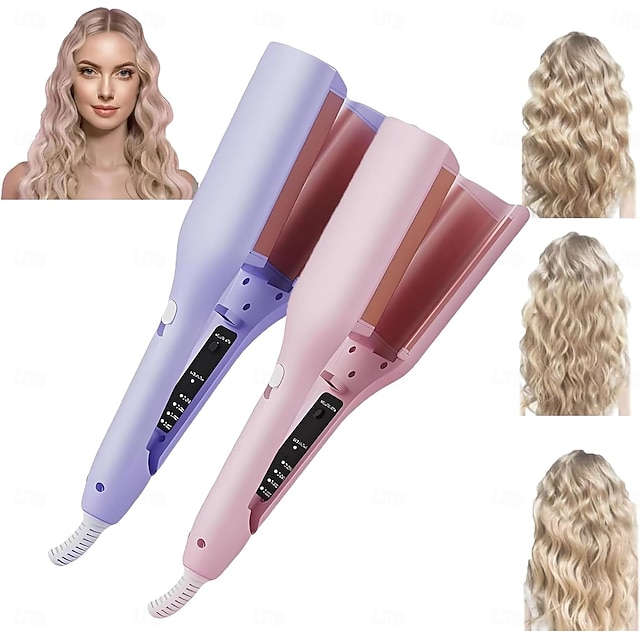
Price checked Oct 20, 2026 · US/USD. Price, availability and options may change.
View on LightInTheBox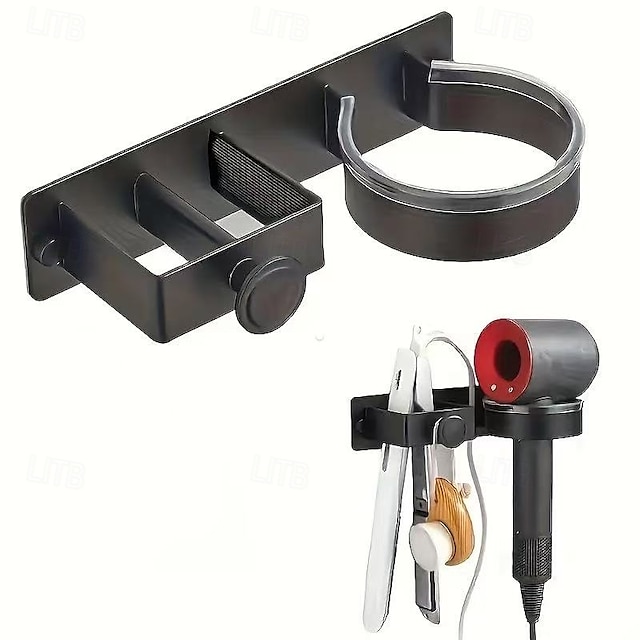
Price checked Oct 20, 2026 · US/USD. Price, availability and options may change.
View on LightInTheBox